

 English
 русский
 Español
 简体中文
简体中文
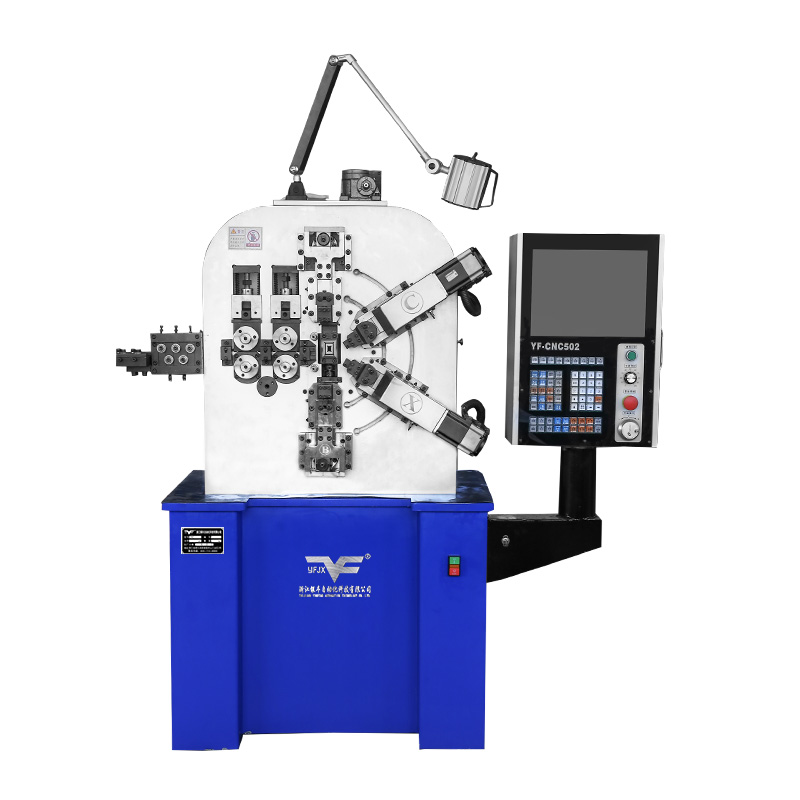
3D 2D Cnc Wire Bending Machine Efficiency And Precision For Production
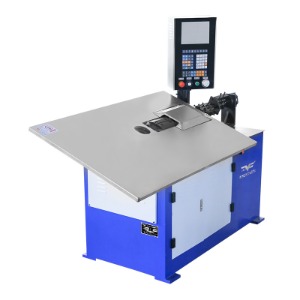
Industry News-The 3D 2D CNC Wire Bending Machine is valued for its ability to deliver both efficiency and precision in wire forming applications. When paired with a Spiral Spring Making Machine, production facilities can achieve high levels of automation and consistent quality across wire components and spring assemblies. These technologies together address the growing demand for accuracy and repeatability in modern manufacturing, adapting well to the diverse and evolving needs of industrial production lines.
Efficiency Through Automation
CNC-controlled wire-bending machines reduce manual labor by automating complex wire-shaping operations that once relied on skilled workers to execute step-by-step. Operators can program machine paths to produce multiple parts consecutively without intervention, streamlining workflows and resulting in higher throughput and consistent part dimensions. Spiral Spring Making Machines provide similar automation for spring production, creating uniform coils rapidly and reducing reliance on handcrafting, which can be slow and inconsistent due to human variability. This shift to automated processes also frees up personnel to focus on oversight, programming adjustments, and other value-added tasks rather than repetitive manual work.
Precision and Repeatability
Precision is critical when wire components must fit within assemblies with tight tolerances, as even slight deviations can disrupt overall product functionality. 3D wire bending machines allow multi-axis control, enabling the creation of complex wire geometries with consistent angles and dimensions across every unit produced. Spiral Spring Making Machines ensure coil consistency in terms of pitch, diameter, and tension—attributes essential for springs used in mechanical or automotive applications where performance reliability directly impacts end-product safety. Together, these machines help maintain stable product quality and keep rejection rates at manageable levels, supporting smooth production cycles.
Integration in Production Lines
Combining wire bending and spring-making technologies allows for streamlined workflows in manufacturing plants, eliminating redundant steps and improving process cohesion. Components that require both bent wires and springs can be planned sequentially, reducing machine idle time and minimizing material handling between different workstations. This integration is especially beneficial in industries that require multiple small-scale components, such as automotive subassemblies, household appliances, or industrial machinery, where coordinating diverse part production is key to meeting output targets.
Practical Considerations for Manufacturers
When deploying these machines, factors such as material type, wire diameter, and production volume should be carefully evaluated to align equipment capabilities with operational needs. Evaluating production equipment involves considering how it performs within a system. The Spiral Spring Making Machine must be compatible with the materials used for bent wires—including metals of varying hardness and flexibility—to ensure uniform performance across all assembled components. Regular calibration and proactive maintenance of CNC wire bending machines and spring coilers help sustain consistent output, preserve operational stability, and prevent unplanned downtime that can disrupt production schedules.
Achieving efficiency and precision in production is greatly enhanced by integrating 3D and 2D CNC Wire Bending Machines with Spiral Spring Making Machines. Manufacturers can produce both complex wire shapes and high-quality springs in parallel, optimizing production timelines and improving overall productivity. This synergy also ensures reliable performance for end-use applications, helping businesses meet the rigorous standards of modern manufacturing markets.
Our Products //
Related Products

Copyright © Zhejiang Yinfeng Automation Technology Co., Ltd. All Rights Reserved. 
Sale Automatic Spring Making Machine