

 English
 русский
 Español
 简体中文
简体中文
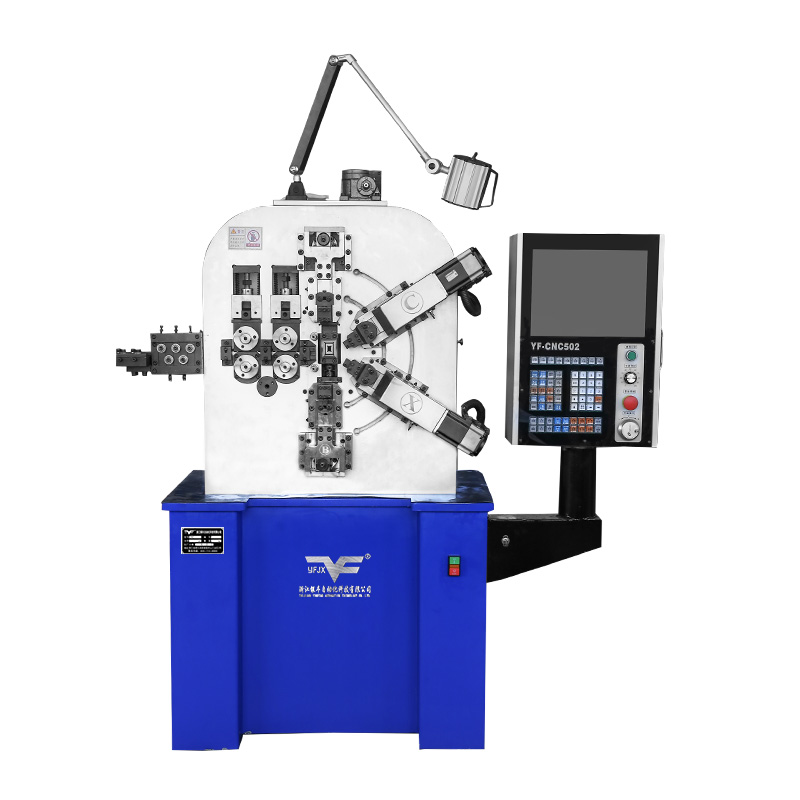
Camless Wire Bending Machine Meets Demand for Complex Wire Shapes
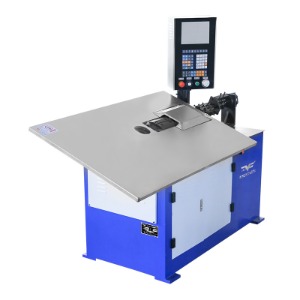
Industry News-The Camless Wire Bending Machine is increasingly associated with the ability to meet demand for complex wire shapes across various manufacturing applications. As product designs evolve, wire components are no longer limited to simple forms. Instead, manufacturers are tasked with producing intricate geometries that require flexible forming strategies.
Increasing Design Complexity in Wire Components
Modern product development often emphasizes compact structures, functional integration, and customized layouts. These trends place higher demands on wire forming processes, especially when components must fit within constrained spaces or interact with other assemblies.
Traditional cam-driven machines may encounter limitations when forming irregular or three-dimensional shapes. Mechanical constraints can restrict bending sequences and make adjustments more time-consuming.
Multi-Axis Coordination Through Camless Design
Camless wire-bending machines rely on coordinated axis control to create complex shapes. Each movement can be programmed independently, allowing forming sequences to adapt to detailed design requirements. This capability supports smooth transitions between bends and enables the creation of shapes that would be difficult to achieve with fixed cam profiles.
By adjusting forming logic digitally, manufacturers can experiment with different bending strategies while maintaining control over process stability.
Typical Applications Involving Complex Shapes
Complex wire shapes appear in many functional components, including structural supports, retention elements, and custom frames. These parts often require multiple bending steps executed in a precise order. Camless systems provide the flexibility needed to manage such sequences without extensive mechanical modification.
For manufacturers handling design-driven orders, this capability allows wire forming operations to align more closely with engineering intent.
Design-to-Production Workflow Integration
Another advantage of camless technology lies in its integration with digital design workflows. Wire shapes defined during the design stage can be translated into production programs with fewer intermediate steps. This reduces the gap between design intent and manufacturing execution.
As a result, product development cycles can proceed more smoothly, with fewer constraints imposed by forming equipment limitations.
Supporting Customized and Varied Orders
Customization has become a common requirement across many markets. Camless wire-bending machines support this trend by enabling a flexible response to design variations. Adjustments can be made at the program level, allowing production teams to accommodate varied specifications without extensive downtime.
This adaptability is especially relevant in environments where order structures change frequently, and product diversity is high.
Direction of Wire Forming Innovation
The ability to form complex wire shapes is expected to remain a central focus in wire forming innovation. Camless wire-bending machines demonstrate how programmable control can support this direction by expanding forming capabilities while maintaining process stability.
Their growing presence reflects an industry-wide emphasis on flexibility, design responsiveness, and digitally supported manufacturing methods.
Camless Wire Bending Machine Meets Demand for Complex Wire Shapes
The camless wire-bending machine is emerging as a core solution for manufacturing complex wire shapes across diverse industrial fields. As product design trends toward miniaturization, integration, and customization, traditional cam-driven machines are limited by fixed mechanical structures in forming irregular 3D wire geometries, with cumbersome adjustments and inflexible bending sequences. By virtue of multi-axis coordinated digital control, the camless model enables independent programming of each movement, realizing smooth bending transitions and precise execution of multi-step forming processes, perfectly adapting to the increasingly complex design requirements of wire components. It breaks the mechanical constraints of traditional equipment, making the wire forming process more flexible, accurate,e and efficient, and effectively meeting the diverse production needs of modern manufacturing.
Our Products //
Related Products

Copyright © Zhejiang Yinfeng Automation Technology Co., Ltd. All Rights Reserved. 
Sale Automatic Spring Making Machine