

 English
 русский
 Español
 简体中文
简体中文
Spiral Spring Making Machine Developments Focus on CNC Precision and Automated Control Systems
Industry News-The manufacturing landscape for Spiral Spring Making Machines is undergoing a significant transformation. The focus of development has shifted decisively from purely mechanical enhancements to sophisticated electronic integration, with particular emphasis on the evolution of computer numerical control (CNC) systems and comprehensive automated control frameworks. This shift is reshaping production capabilities, offering manufacturers tools to meet increasingly complex and stringent product specifications.
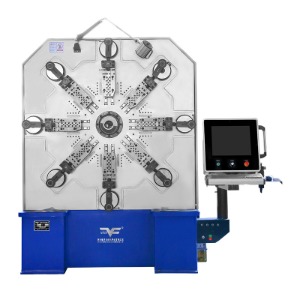
The Core of Modern Control: CNC System Evolution
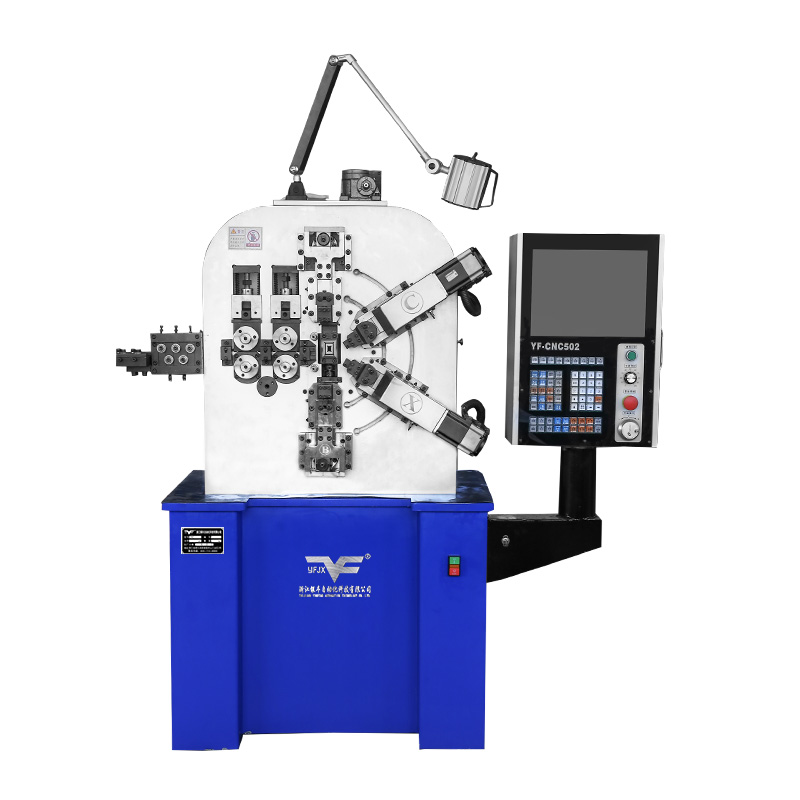
At the heart of contemporary machines lies the advanced CNC system. These systems have moved beyond basic programmable commands to incorporate multi-axis servo motor coordination. This coordination allows for simultaneous and highly synchronized movements of the wire feeder, guide arms, and cutting mechanisms. The integration of direct feedback from encoders and sensors provides a continuous stream of data on wire position and tool location. This real-time data enables the control system to make micro-adjustments during the coiling process, counteracting potential deviations caused by material spring-back or mechanical wear. The result is a tangible improvement in the dimensional consistency of springs, especially those with intricate geometries.
Building the Automated Workflow
Parallel to advancements in CNC precision is the development of holistic automated control systems. These systems aim to create a seamless workflow from raw material to finished product. A key component is the integration of machine vision units. These units can perform tasks such as inspecting spring dimensions, checking for surface defects, and verifying end forms right at the point of production. Springs that do not meet set parameters can be automatically diverted, ensuring consistent output quality. Furthermore, these control systems are designed with connectivity in mind, facilitating communication with broader factory management software. This allows for production data tracking, schedule management, and the centralized adjustment of job parameters across multiple machines.
Impact on Manufacturing Flexibility and Complexity
The convergence of these technologies has a direct impact on what is manufacturable. The ability to precisely control each axis of motion independently makes it feasible to produce springs with variable pitch, conical shapes, or complex end configurations that were challenging or inefficient on older equipment. This flexibility supports a trend toward smaller batch sizes and more customized components without compromising production speed. Manufacturers can switch between different spring designs through software program changes rather than extensive mechanical retooling, reducing setup time and expanding their service offerings.
Shifting Operational Demands and Skills
As machines become more automated and software-driven, the nature of the operator's role is evolving. While manual dexterity and mechanical intuition remain valuable, there is a growing need for skills in computer literacy, basic programming, and system troubleshooting. Operators are increasingly becoming machine supervisors who monitor system performance, interpret diagnostic information, and manage production schedules through intuitive human-machine interfaces. This shift requires updated training approaches that blend traditional mechanical knowledge with new digital competencies.
Looking Forward: Adaptive and Connected Systems
The trajectory of development points toward even greater integration and intelligence. Future systems may incorporate adaptive algorithms that can learn from production data to suggest or implement fine-tuned parameters for different material batches, potentially compensating for natural variances in wire properties. The concept of the machine as an isolated unit is fading, giving way to its role as a node in a connected manufacturing cell, exchanging data with upstream and downstream processes for optimized material flow and quality assurance.
The ongoing developments in Spiral Spring Making Machines are fundamentally centered on electronic control and automation. By enhancing CNC precision and building interconnected automated systems, these advancements are providing manufacturers with the necessary tools to achieve consistent quality, handle complex designs, and operate with improved efficiency in a dynamic market.
Our Products //
Related Products

Copyright © Zhejiang Yinfeng Automation Technology Co., Ltd. All Rights Reserved. 
Sale Automatic Spring Making Machine