

 English
 русский
 Español
 简体中文
简体中文
Spiral Spring Making Machine: How to Choose Between CNC and Automatic Types
Industry News-Selecting the right Spiral Spring Making Machine is a decision that hinges on a clear understanding of production needs. The choice often centers on two broad categories: dedicated automatic machines and more versatile CNC (Computer Numerical Control) machines. Each type offers distinct advantages, and the selection depends on a careful evaluation of product requirements, production volumes, and operational goals.
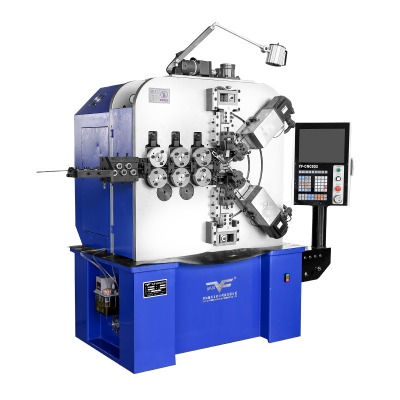
Defining the Core Characteristics
It is helpful to begin by clarifying the typical profile of each machine type. Dedicated automatic spring coilers are engineered for efficient, continuous production. They often use mechanical cams and gears to govern movements, which makes them capable of very high cycling speeds for a specific spring design. Their strength lies in producing large quantities of a single or very similar spring type with consistency. In contrast, CNC spring machines use individual servo motors to control each axis of motion (wire feed, coiling, pitch, and cutting) through programmed instructions. This electronic control provides a high degree of flexibility, allowing for quick changes between different spring designs—including those with variable pitch or complex shapes—by loading a new program, often with minimal mechanical adjustment.
Evaluating Based on Product and Volume
The nature of the springs to be produced is the primary filter. For operations that require millions of identical compression or extension springs annually, the speed and dedicated efficiency of a cam-based automatic machine can be advantageous. However, if the product mix includes frequent changeovers, smaller batch sizes, or springs with non-standard geometries (like progressive rates or special end forms), the programmable flexibility of a CNC machine becomes compelling. CNC systems reduce setup time between jobs and lower the physical inventory of change parts like cams.
Considering Financial and Operational Factors
The financial picture involves more than the initial purchase price. Automatic machines may have a lower entry cost for a standard configuration, but could require custom-made cams for non-standard products, adding to cost and advanced time. CNC machines might involve a higher initial investment but offer savings in tooling and changeover time for diverse production. Operationally, CNC machines generally require personnel with skills in programming and software navigation, whereas automatic machines demand deeper mechanical setup and cam design knowledge. Training availability and the existing skill set of the workforce are practical considerations.
Assessing Long-Term Adaptability
The potential for future growth and product line expansion should also weigh in on the decision. A CNC machine, with its software-defined capabilities, inherently offers more adaptability to new designs and market demands. An automatic machine, while exceptionally efficient within its design scope, may be less suited to a significant pivot in product type without substantial mechanical reconfiguration. For facilities anticipating evolution in their spring offerings, the inherent flexibility of CNC technology can provide a longer useful life for the equipment.
Exploring a Hybrid Strategy
For some manufacturers, the answer is not a single choice but a strategic combination. A facility might employ one or more automatic machines to handle high-volume, staple product lines, while using a CNC machine to manage custom orders, prototypes, and lower-volume specialty items. This approach balances the strengths of both technologies across the production portfolio.
Choosing between an automatic and a CNC Spiral Spring Making Machine requires a thorough analysis of present and anticipated needs. By carefully weighing factors of product complexity, production volume, financial parameters, skills, and future flexibility, manufacturers can select the technology that aligns with their specific operational context and business objectives.
Our Products //
Related Products

Copyright © Zhejiang Yinfeng Automation Technology Co., Ltd. All Rights Reserved. 
Sale Automatic Spring Making Machine