

 English
 русский
 Español
 简体中文
简体中文
Spiral Spring Making Machine: How to Reduce Material Rebound in Production
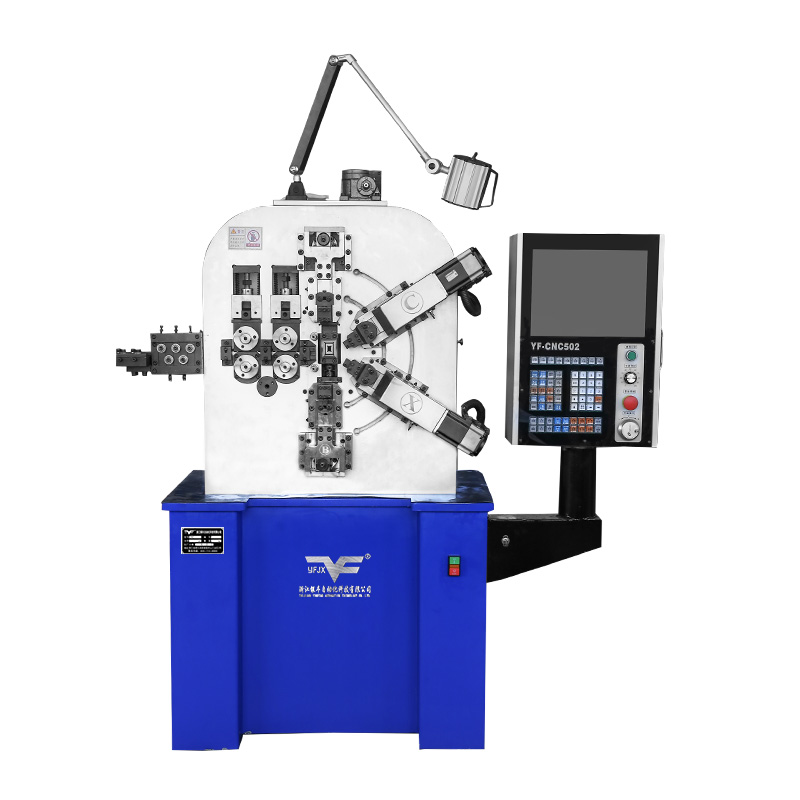
Industry News-Spring manufacturers often face challenges related to material rebound during the forming process. When wire or flat strip material returns slightly to its original shape after coiling, spring dimensions can become inconsistent. In modern production environments, the Spiral Spring Making Machine is designed to help control these forming variations through improved feeding systems, servo adjustment functions, and stable winding structures.
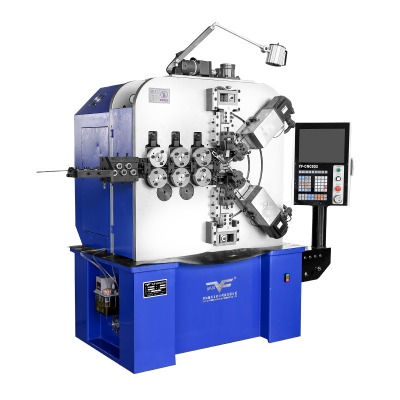
Why Material Rebound Happens
Material rebound is a common issue in spring manufacturing. During the coiling process, the wire experiences pressure and bending force. After the forming tool releases the material, the spring may partially return toward its original shape. This affects spring diameter, coil spacing, and overall consistency.
Different materials behave differently during production. Stainless steel, carbon steel, and alloy spring materials all have unique elasticity characteristics. Thickness, hardness, and surface condition can also influence rebound behavior.
Production speed may also affect spring stability. If the coiling process becomes too aggressive, the material may respond unevenly during forming.
Stable Feeding Helps Improve Consistency
Wire feeding plays an important role in controlling rebound. If the feeding tension changes suddenly during operation, the spring may form unevenly. Modern spring machines often include improved feeding structures that support smoother material movement.
Stable feeding allows the material to enter the forming area with more consistent tension. This helps operators maintain better control over spring dimensions during continuous production.
Accurate wire guidance is also important when processing thin materials or flat strips. Proper alignment supports more stable winding and helps reduce unwanted deformation during forming.
Servo Adjustment Supports Better Forming Control
Servo-controlled systems allow operators to adjust forming movement more precisely. Compared with traditional mechanical adjustment methods, servo systems provide smoother movement coordination during winding.
Operators can fine-tune coiling speed, feeding pressure, and forming angles according to material behavior. This makes it easier to compensate for rebound characteristics when processing different spring materials.
Programmable settings also help factories maintain production consistency across repeated orders. Stored parameters reduce the need for repeated manual adjustment and support more organized setup procedures.
Tooling Condition Affects Spring Accuracy
Forming tools directly influence spring quality during production. Worn tooling surfaces may create unstable pressure on the material, uneven coil formation, and inconsistent rebound results.
Regular tooling inspection helps maintain smoother contact between the forming structure and the material surface. Clean and properly adjusted tooling also supports better dimensional stability during long production runs.
In some cases, operators may adjust forming angles slightly to compensate for expected rebound after coiling. Small corrections during the setup stage can help improve spring consistency throughout production.
Material Selection Remains Important
Different spring materials require different forming approaches. Harder materials may produce stronger rebound effects, while softer materials may respond differently during winding.
Manufacturers often test sample springs before full production begins. This allows operators to evaluate rebound behavior and adjust machine parameters if necessary.
Factories producing multiple spring types benefit from machines capable of handling different materials efficiently. Flexible adjustment systems support smoother transitions between product specifications and help improve overall production organization.
As spring manufacturing technology continues to develop, better forming control and more stable automation systems are helping factories manage rebound challenges more effectively while supporting consistent spring production quality.
Our Products //
Related Products

Copyright © Zhejiang Yinfeng Automation Technology Co., Ltd. All Rights Reserved. 
Sale Automatic Spring Making Machine