

 English
 русский
 Español
 简体中文
简体中文
Technical Specs Explained: Spiral Spring Making Machine Wire Range & Accuracy
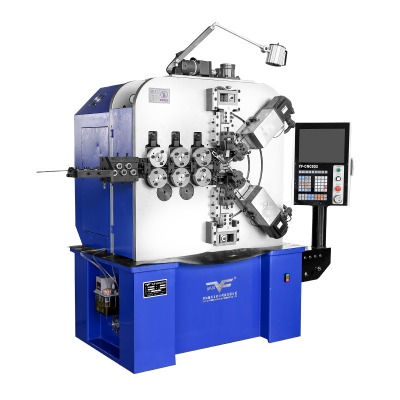
Industry News-Selecting spring manufacturing equipment often involves more than comparing machine size or production speed. Many buyers focus heavily on technical specifications because these details directly influence production capability and spring quality. In modern factories, the Spiral Spring Making Machine is expected to support stable forming performance across different wire materials, spring dimensions, and production environments.
Why Wire Range Matters
Wire range is one of the important specifications in spring production equipment. Different spring applications require different wire diameters, and manufacturers often need machines capable of handling multiple product types.
Thin wire materials are commonly used in electronic devices, compact mechanical parts, and precision components. These applications require stable feeding and accurate forming control to prevent wire deformation during production.
Medium and thicker wire materials are often used in industrial equipment, retractable systems, and mechanical spring assemblies. Processing these materials requires stronger forming structures and stable winding coordination.
Before selecting a machine, manufacturers usually evaluate the types of springs they plan to produce and whether future production requirements may change over time.
Spring Diameter and Thickness Support
In addition to the wire range, buyers also pay close attention to spring diameter capability. Some applications require compact springs with tight winding structures, while others involve larger coil dimensions.
Flat spiral spring production may also involve different strip thicknesses. Machines designed for flexible production often include adjustable forming systems that allow operators to process various spring sizes more efficiently.
Stable diameter control is important because inconsistent winding can affect spring performance during final product assembly. Proper machine adjustment helps maintain more uniform coil spacing and spring shape consistency.
Accuracy Influences Production Stability
Spring accuracy affects both product quality and production efficiency. If spring dimensions change during continuous operation, manufacturers may face additional inspection work and material waste.
Modern spring machines often use servo-controlled systems to support more stable positioning during forming. Accurate movement coordination helps maintain consistent winding results during long production runs.
Repeatability is another important factor. Factories producing the same spring design repeatedly need equipment capable of maintaining similar forming conditions across multiple batches.
Operators also benefit from digital control systems that allow easier parameter adjustment and monitoring during production.
Material Compatibility Expands Production Flexibility
Spring manufacturers frequently work with different materials depending on product requirements. Stainless steel, carbon steel, and alloy materials all behave differently during the winding process.
Machines capable of supporting multiple material types provide more production flexibility. Stable feeding structures and adjustable forming pressure help operators manage changing material characteristics more efficiently.
Some factories also process flat strip materials for clock springs, tape measure springs, and retractable systems. Equipment designed for both wire and flat material processing can support broader manufacturing applications.
Choosing Equipment Based on Production Needs
Machine selection often depends on the production environment. Factories handling small precision springs may focus more on forming accuracy and stable wire control. Manufacturers producing larger industrial springs may prioritize stronger forming structures and continuous production capability.
Automation functions are also becoming more important. Features such as programmable settings, servo adjustment, and digital monitoring systems help improve workflow organization and reduce manual setup time.
Production flexibility remains an important consideration for many buyers. Machines that support multiple spring specifications can help factories respond more efficiently to changing manufacturing demands.
As industrial production continues to evolve, manufacturers are paying closer attention to wire range, forming accuracy, and material compatibility when selecting spring manufacturing equipment for long-term production planning.
Our Products //
Related Products

Copyright © Zhejiang Yinfeng Automation Technology Co., Ltd. All Rights Reserved. 
Sale Automatic Spring Making Machine